
How to Identify an Iron County Property Owner
Start with an address. Look up the parcel in Ascent, the county's parcel system. Then open LandShark, the Register of Deeds index. Find the latest conveyance tied to that land. Each source answers a different question. Ascent carries the current tax-roll name and legal description. LandShark holds the instrument that actually recorded the transfer. When the owner is a business or trust, search that entity name on its own. Keep the two records straight. This method identifies the owner shown in Iron County property records. It does not settle who occupies the site or decide legal title.
- Search the situs address in Ascent and record the parcel identifier and legal description.
- Read the owner information in the parcel record, noting that the exact displayed field label was not verified.
- Search LandShark for the latest deed by parcel, grantee, grantor, or recording reference.
- Compare the parties and legal description, then check an LLC or business name in Wisconsin DFI if needed.
Iron County Property Owner Data Starts with the Tax Lister
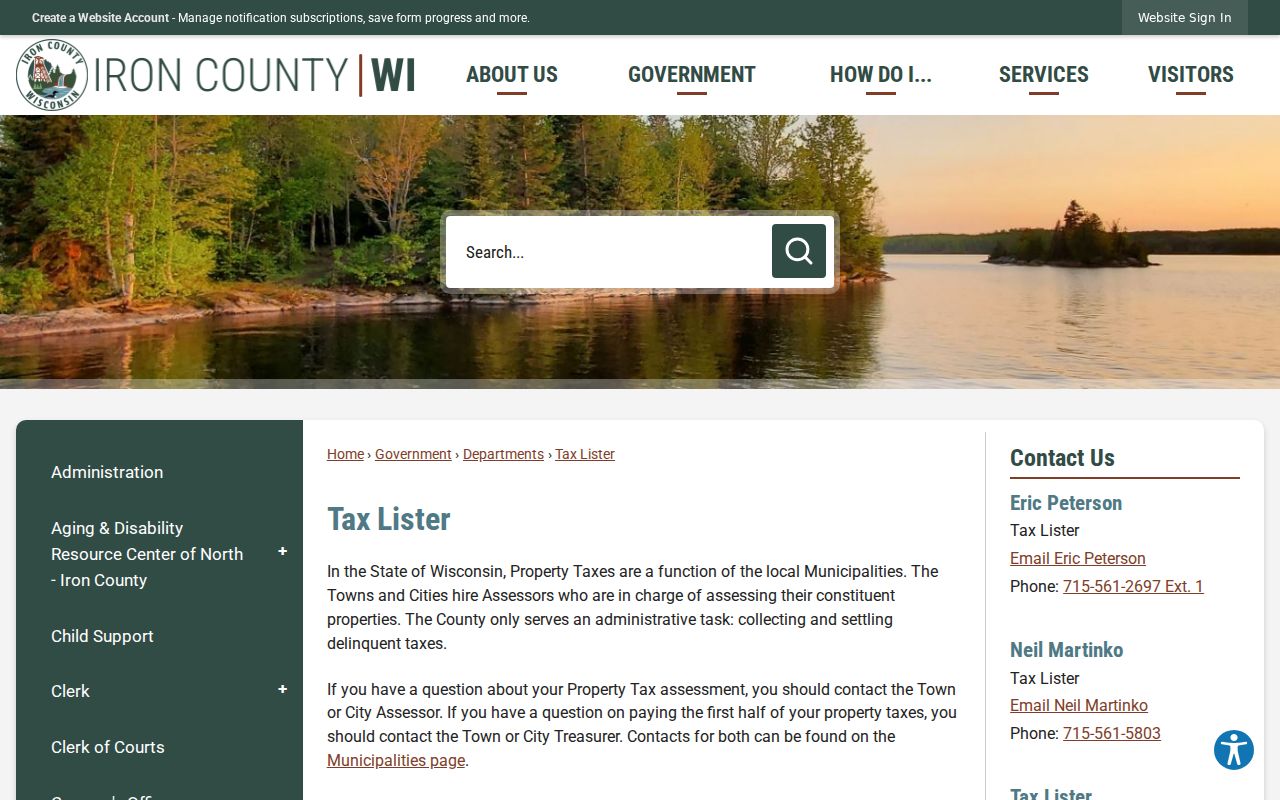
Ownership data begins with the county Tax Lister. That office maintains ownership and legal-description information and supports the parcel record behind Ascent. Wisconsin's municipal assessors set assessed values. The county parcel system, meanwhile, organizes ownership and tax details for lookup. The public Ascent view shows owner and parcel data. The exact on-screen field labels vary, though. Treat the displayed name as what that record reports, not a title guarantee. The Iron County Tax Lister description lays out the office's ownership and legal-description duties.
Carry the parcel's exact identifier and legal description over to the deed index. A name by itself can point to the wrong person or entity.
Sources for an Iron County Property Owner Lookup
Each public source adds a different piece of the ownership picture. The parcel and the tax roll carry the name and description data. That data is kept by the Tax Lister. LandShark lists the parties on recorded instruments. Wisconsin DFI's business records can explain an LLC name, but the land deed still governs. GIS shows parcel shapes and boundaries. The county's published layer list, however, does not tie an owner field to each shape.
| Source | Owner Info It Gives | Access |
|---|---|---|
| Ascent parcel and tax view | Owner and description data, parcel, tax and history tabs | Public county search; no login reported |
| LandShark deed index | Grantor, grantee, instrument, and land description | Online index; document-image charges may apply |
| Wisconsin DFI entity records | Business-entity filing and registered-agent context | State corporate-record search |
| Iron County GIS | Parcel location, roads, addresses, boundaries, and map layers | Public map; not a title source |
A parcel's name is an owner-of-record clue, not a resident list. The mailing address can differ from the situs address. A recorded owner may be a trust, an estate representative, or a company. An occupant can appear nowhere in the parcel roll. Use only the public record that answers your property question.
Confirming an Iron County Property Owner with the Latest Deed
Once Ascent gives you the parcel name, hunt for the newest conveyance in LandShark. Search the grantee side to find the deed into that owner. Search the grantor side to catch a later transfer out. Compare the instrument date, recording reference, legal description, and parties. The deed is the filed evidence of a transfer. The tax roll can lag a closing, and the county publishes no standard update interval.
A recent recording beats an older tax entry as proof of transfer. Even so, it may not resolve every interest or exception. If no deed matches, try the parcel number. Try the legal description, a business or trust name, and both grantor and grantee roles. LandShark's online tract index began in April 2003. Imaging followed in July 2003, and older records are back-scanned over time.
Iron County Property Owners Using Trusts, LLCs, or Estates
Iron County land often sits in an LLC, a trust, a trustee, or a personal representative's name rather than a person's own. Search the exact entity in LandShark as well as the parcel owner in Ascent. The deed's grantee wording shows which party received the interest. Wisconsin DFI business records add entity filing and registered-agent context. An agent's contact is not always the person who owns the land or calls the shots for the property.
Probate files can explain why an estate or personal representative appears in a conveyance. WCCA offers public case-search summaries, while the local Clerk of Courts holds the case file. A probate order and a recorded deed are separate records. Compare both whenever a death-related transfer sits in the chain.
Iron County Property Owner Alerts for Recorded Changes
Iron County offers free Land Notification Alerts. The service matches multiple personal or business names. It sends email or text notices when a matching land document is recorded. An owner can treat an alert as a prompt to pull the new filing in LandShark and read it. It is name-based, though. So it is not fraud proof, a complete ownership monitor, or an official title status. The county alert page explains how to sign up. When a notice lands, verify the parcel, parties, and instrument before drawing any conclusion. Names get shared, and indexing can take an unexpected form.
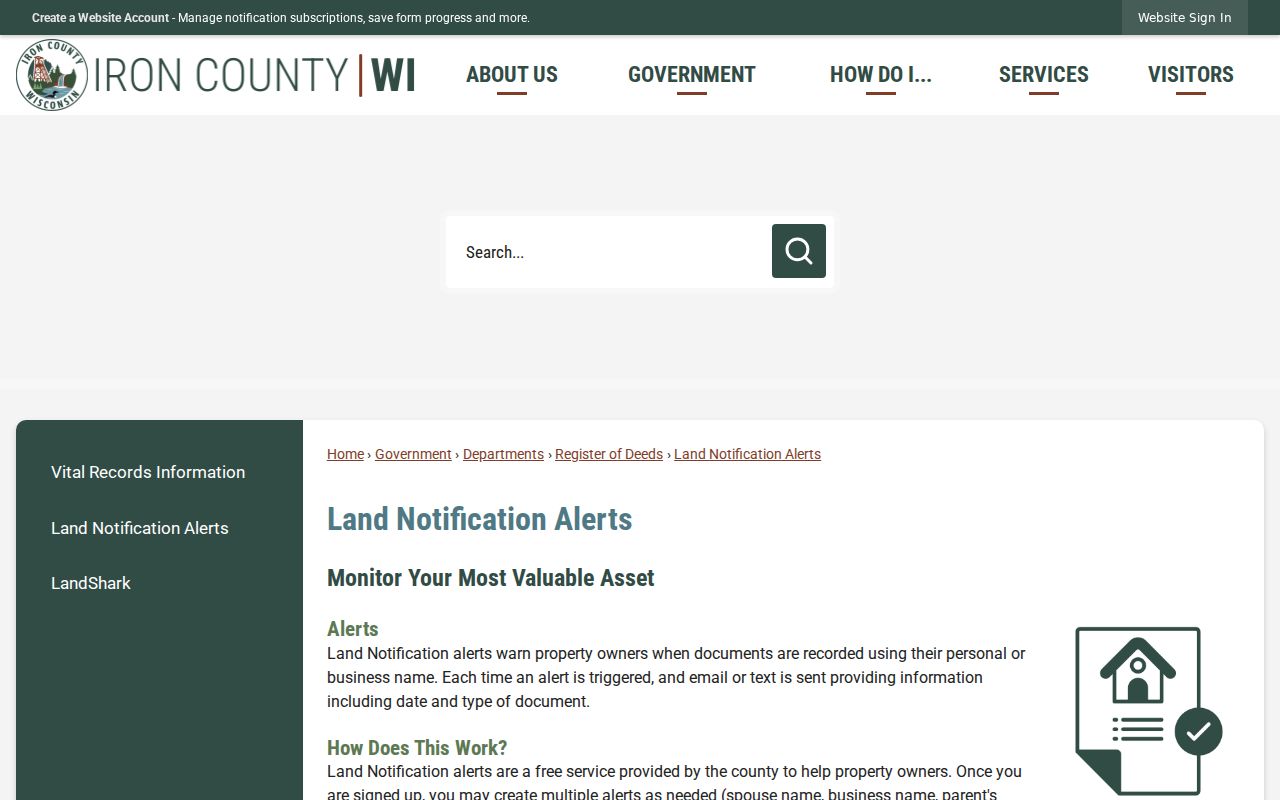
Alerts only flag a matching filing for review. They decide neither ownership nor an instrument's validity.
Iron County Property Owner Mailing and Situs Addresses
The Tax Lister tracks two addresses for every parcel, and mixing them up causes confusion. The situs address tells you where the land actually sits. The mailing address is different. It may be a post-office box, a business, or a trustee's office. That address may not be the parcel itself. When you search Iron County property records, keep the two straight. This matters most if you are comparing tax notices or drafting a letter about the land.
If you need to contact an owner about a property matter, use the public mailing address. Limit it to that one purpose. Do not republish personal details. The owner of record listed on the tax roll can differ from the name on a newer deed. Compare both. A sale, trust, or estate change shows up first in the deed records. That recorded conveyance, not the tax roll, is the stronger source for the current owner.
One more distinction helps. Property records answer who is listed on the deed and tax bill. They cannot tell you who lives there or who controls the property day to day. Keeping the question tied to land records protects you from overstepping. It also keeps a mailing detail from becoming an excuse to bother someone about unrelated matters.
Limits of an Iron County Property Owner Search
Land and tax records in Iron County name parties and describe property interests, nothing more. They do not reveal who occupies a building. A parcel lookup is also not a title search or a background report. It is no tool for identifying protected people. Wisconsin's Safe at Home program and confidential-elector rules can shield actual addresses in certain records. Respect those protections, and stop when the property records lawfully decline to disclose an address.
Lawful use. Use an Iron County owner lookup for property research and legitimate land due diligence. Do not use owner information to stalk, intimidate, or harm anyone, and do not try to defeat a confidentiality protection.